Red Antique Flower Tumbler Wrap Sublimat
First Impressions: A Vintage Whisper, Not a Shout
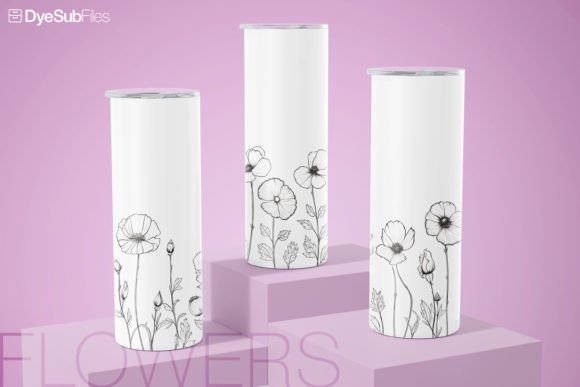
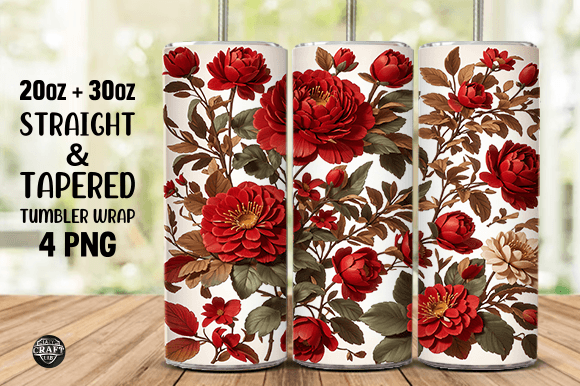
When I opened Red Antique Flower Tumbler Wrap Sublimat, what struck me wasn’t boldness—it was intention. The composition leans into soft asymmetry: a cluster of stylized antique blooms—roses, maybe peonies—with delicate stems and subtle leafwork, all rendered in rich crimson against an implied off-white or cream ground. It doesn’t scream “sublimation”—it breathes like a pressed botanical page from a 19th-century apothecary journal. That mood matters deeply when translating to embroidery. This isn’t a design that will hold up as a dense fill-stitch monstrosity on a toddler’s onesie. But on a linen tea towel? A cotton apron for a boutique bakery? A structured tote bag lined with canvas? Yes—it lands with quiet authority.
Where It Lives Best: Real Projects, Not Just Pixels
Last week, I used Red Antique Flower Tumbler Wrap Sublimat as the anchor motif for a custom embroidered apron set—three pieces for a local ceramicist’s studio launch. I resized it carefully to fit a 4” x 6” hoop area on the chest pocket, simplified the outermost petals slightly to avoid over-stitching, and paired it with a fine running stitch border instead of heavy satin. The result felt handmade, not mass-produced. Customers commented on how “thoughtful” and “timeless” it looked—not trendy, but enduring. That’s the sweet spot: Red Antique Flower Tumbler Wrap Sublimat thrives in projects where craftsmanship and narrative matter more than flash—think nursery decor (pillow covers, muslin swaddles), holiday gifts (embroidered kitchen towels for Christmas, linen sachets for Mother’s Day), or small shop merchandise (caps for a flower shop, patch sets for craft fairs).
What Translates Well—And What Doesn’t
- Works beautifully on: medium-weight woven fabrics (cotton twill, linen, denim), flat surfaces (tote bags, pillow fronts, sweatshirt yokes), and stable substrates like embroidered patches or appliqué bases.
- Use with care on: stretchy knits (like baby onesies or lightweight tees)—the floral outlines can blur without precise stabilizer control; dark fabrics (red thread on black loses antique subtlety unless you switch to burgundy or oxblood); curved surfaces like cap fronts (the stem flow breaks visually without layout adjustment); and ultra-thin fabrics (like voile), where dense satin areas may pucker.
- Avoid for: tiny hoops under 3”, highly textured surfaces (bouclé, thick terry), or products meant for heavy laundering (like kids’ lunch bags) unless stitch density is reduced and thread tension tested thoroughly.
Design Integrity in Stitch: Clarity Over Complexity
This isn’t a high-detail machine embroidery design built for photorealism—it’s a graphic with embroidery-friendly rhythm. The petals have gentle curves, not micro-edges. The stems taper cleanly. There’s breathing room between elements, which means less risk of thread nesting or skipped stitches during long runs. As an embroidery file adapted from a sublimation wrap, its strength lies in silhouette and balance—not pixel-perfect rendering. That makes it forgiving for beginners but still rewarding for pros who know how to interpret line weight through stitch type: satin for central blooms, light fill for background leaves, running stitch for vine accents.
Commercial Use & Customer Trust: More Than Just Pretty
I’ve seen too many Etsy sellers list “vintage floral” designs that feel generic—repetitive, over-saturated, forgettable. Red Antique Flower Tumbler Wrap Sublimat stands out because it carries a point of view. When customers see it on a finished product—a hand-stitched baby blanket, a boutique sweatshirt—they don’t just register “flower.” They register *care*. That builds trust. For craft businesses, that translates directly to perceived value and willingness to pay a premium. Just be sure to confirm licensing before using it commercially—especially if you plan to sell digital embroidery files, printable mockups, or bundled design assets. The listing says “INSTANT DOWNLOAD” and “Zipp,” but no explicit license terms are given. Always verify.
Practical Designer Notes Before You Stitch
- Test Red Antique Flower Tumbler Wrap Sublimat on scrap fabric first—especially if pairing with textured or dark backgrounds.
- Check thread color contrast: true red can flatten on warm-toned linens; try maroon or brick for depth.
- Review stitch density—if the original file includes dense fill areas, consider reducing density by 10–15% for breathable fabrics.
- Confirm hoop size compatibility: while designed for skinny tumblers, its proportions adapt well to standard 4x4 or 5x7 hoops—but verify actual dimensions before digitizing.
- Inspect small details: tiny stamen or leaf tips may need slight enlargement for clarity at smaller scales.
- Mock it up in black and white: if the design loses shape or hierarchy without color, simplify before stitching.
- Use cutaway stabilizer for woven fabrics, tear-away for lighter cottons—never skip stabilization on detailed florals.
- Ask yourself: does this support your brand voice? If your shop sells modern minimalism, this might feel dissonant. If you lean into heritage, warmth, and tactile charm—it’s a natural fit.
Final Thought: A Design That Earns Its Place
Red Antique Flower Tumbler Wrap Sublimat won’t dominate a tradeshow booth or go viral on social media—but it will make someone pause while folding laundry, smile while sipping coffee from a personalized tumbler, or choose your handmade apron over three others on a boutique shelf. That’s the quiet power of intentional design. It’s not about scale or saturation. It’s about resonance. Use it where attention is earned slowly—in heirloom baby embroidery, thoughtful holiday gifts, or the kind of small shop product people keep, not discard. And always, always test it first—not as a formality, but as a conversation between your needle and the design’s quiet confidence.